

Whether you’re new to longevity and functional care or already working with our physician-led team, this glossary offers clear, plain-English definitions of the terms you’ll see throughout our website.
It covers diagnostic testing, IV and infusion therapies, regenerative injections, hormone and fertility programs, and weight optimization. Each entry explains what a service involves and why it may be part of a care plan, so you can walk into a consultation with better questions. Availability can vary by location.
In this glossary, you’ll learn:
- What common longevity and regenerative therapies involve
- How diagnostic testing guides a personalized care plan
- Which therapies are designed to support goals like hormone balance, recovery, and overall wellness
Biologic Age Testing
Biologic age testing estimates how your body is functioning on the inside, rather than just counting birthdays. Using blood and lab markers tied to inflammation, metabolism, hormones, and cellular health, it produces a “biological age” that may differ from your chronological age.
It’s often the first step in a longevity program, setting a baseline for later retests. Panels may include inflammatory proteins, blood sugar regulation, and lipid markers.
CBD (Cannabidiol) IV Therapy
CBD IV therapy delivers cannabidiol, a non-psychoactive compound derived from hemp, directly into the bloodstream. Because it bypasses digestion, it’s absorbed differently than oral CBD products.
Some patients consider it alongside other IV protocols focused on relaxation, mental wellness, or recovery, based on their clinical profile. Patients curious about other infusion options can browse our full lineup of IV and infusion therapies to find the right fit.
Chelation Therapy
Chelation therapy is an intravenous therapy that uses a binding agent, most commonly EDTA (ethylenediaminetetraacetic acid), which attaches to heavy metals such as lead in the bloodstream so they can be excreted through urine.
Chelation may be used as one element of a broader care plan when lab testing confirms elevated metal levels. Sessions are typically scheduled as a series over several weeks, with follow-up testing to monitor levels over time.
EBOO Therapy (Extracorporeal Blood Oxygenation and Ozonation)
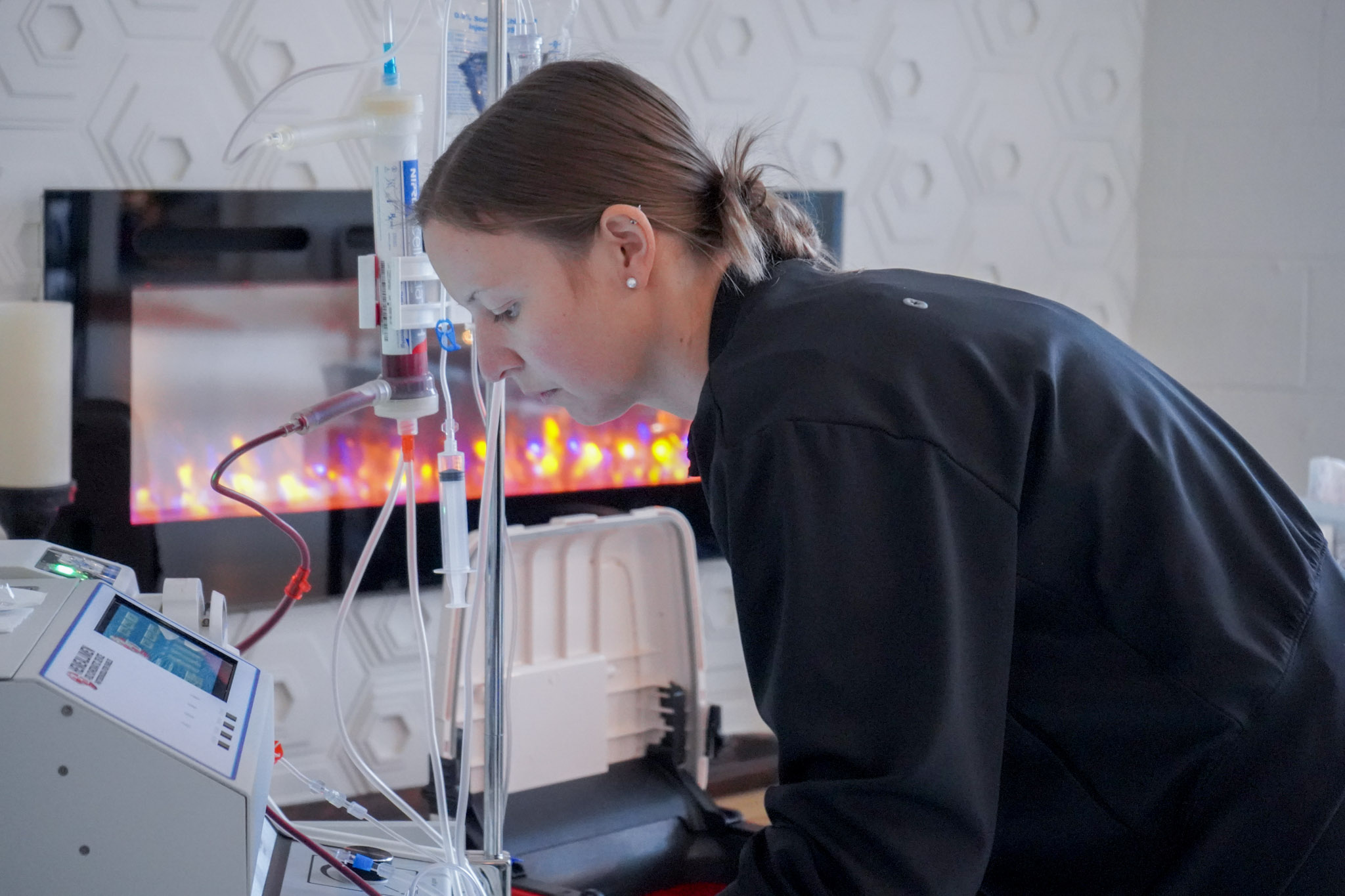
EBOO therapy is a specialized IV therapy that draws a small amount of blood, exposes it to oxygen and medical-grade ozone outside the body, filters it, and returns it to the bloodstream. It’s a more involved form of ozone therapy than standard ozone IV administration.
EBOO may be paired with other IV protocols as part of a broader wellness plan.

Fertility Optimization Program
A fertility optimization program combines hormone testing, nutrient support, and targeted therapies designed to support reproductive health for men and women trying to conceive. Each plan is built around the patient’s own lab results.
For men and women, options may include hormone-focused care or other therapies selected after review of the patient’s history and testing. A physician may discuss hormone balancing and other options based on testing.
Fractional CO2 Laser Resurfacing
Fractional CO2 laser resurfacing uses a carbon dioxide laser to deliver micro-columns of energy into the skin, a process designed to stimulate collagen production while leaving surrounding tissue intact.
It may be used to address the appearance of fine lines, scarring, and sun damage. Recovery time varies by resurfacing depth, and changes tend to develop gradually over several weeks as new collagen forms.
Hair Follicle Regeneration Therapy
Hair follicle regeneration therapy uses regenerative techniques, most often PRP injections, designed to stimulate dormant or thinning hair follicles.
Platelets are concentrated from the patient’s own blood and injected into the scalp. The number and timing of sessions are determined as part of the individual care plan.
High-Dose Vitamin C IV Therapy
High-dose vitamin C IV therapy delivers vitamin C directly into the bloodstream at levels higher than diet or oral supplements can reach, since the digestive tract limits how much vitamin C the body absorbs orally.
The infusion is often combined with other IV protocols as part of a broader wellness plan.

Hormone Optimization
Hormone optimization is a personalized plan for men and women that uses lab testing to identify hormone imbalances, then builds a plan designed to support balance through bioidentical hormones, peptides, or lifestyle changes, based on each patient’s clinical profile.
If low energy, weight changes, poor sleep, or low libido are concerns, testing hormone levels is a reasonable place to start. The table below outlines hormones commonly assessed, grouped by the system they belong to.
| Hormone | Hormone Group | What It Affects |
| Testosterone | Sex hormone | Energy, muscle mass, libido, mood (men and women) |
| Estrogen | Sex hormone | Menstrual cycle, bone density, mood, skin health |
| Thyroid (T3/T4) | Thyroid | Metabolism, energy, weight regulation |
| Hormone | Hormone Group | What It Affects |
| DHEA (dehydroepiandrosterone) | Adrenal | Precursor hormone linked to energy and stress resilience |
| Cortisol | Adrenal | Stress response, sleep, inflammation |
If you’d like a physician to review which hormones may be worth testing for your symptoms, you can schedule a consultation to get started.
Intravenous Nutrient Therapy
Intravenous nutrient therapy delivers vitamins, minerals, and other nutrients directly into the bloodstream through an IV infusion. Because nutrients enter the bloodstream directly, absorption doesn’t depend on digestion, which is why IV delivery is sometimes chosen over oral supplements.
Formulas are customized to the patient’s goals and lab results. The table below compares common formulation types and the add-ins they typically include.
| Formulation Focus | Common Add-Ins | Commonly Chosen For |
| Immune support | Vitamin C, zinc | Periods of stress or seasonal change |
| Energy | B vitamins, amino acids | Feeling sluggish or run down |
| Antioxidant support | Glutathione, B vitamins | Supporting antioxidant defenses |
| Hydration | Fluids, electrolytes | Muscle recovery, fatigue |
Longevity Roadmap
A longevity roadmap is a personalized report that translates a patient’s lab results and biologic age testing into a clear action plan, outlining which longevity therapy, lifestyle changes, and retesting intervals are recommended.
It’s typically delivered after the initial intake and testing phase, giving patients a concrete reference point for what to expect and how progress will be measured over time.
Lymphatic Drainage Therapy
Lymphatic drainage therapy uses gentle pressure or compression technology, such as the Ballancer Pro system, designed to encourage lymph fluid movement through the body.
Because the lymphatic system doesn’t have its own pump the way the circulatory system does, manual or mechanical stimulation may help support its natural flow. Some patients consider it for swelling or bloating, post-procedure recovery, or general wellness maintenance.
Medical Laser Therapy
Medical laser therapy uses targeted light energy; the wavelength, setting, and intended use vary by device.
In a longevity or aesthetics setting, laser therapy may be considered as part of a care plan. The appropriate device, settings, and number of sessions depend on the patient and the indication.
Methylene Blue IV Therapy
Methylene blue IV therapy is an intravenous therapy using methylene blue, a compound studied for its role in mitochondrial energy production and cognitive function. A physician reviews your current medications before starting, because methylene blue can interact with certain medications, including SSRIs and SNRIs.
NAD+ (Nicotinamide Adenine Dinucleotide) IV Therapy
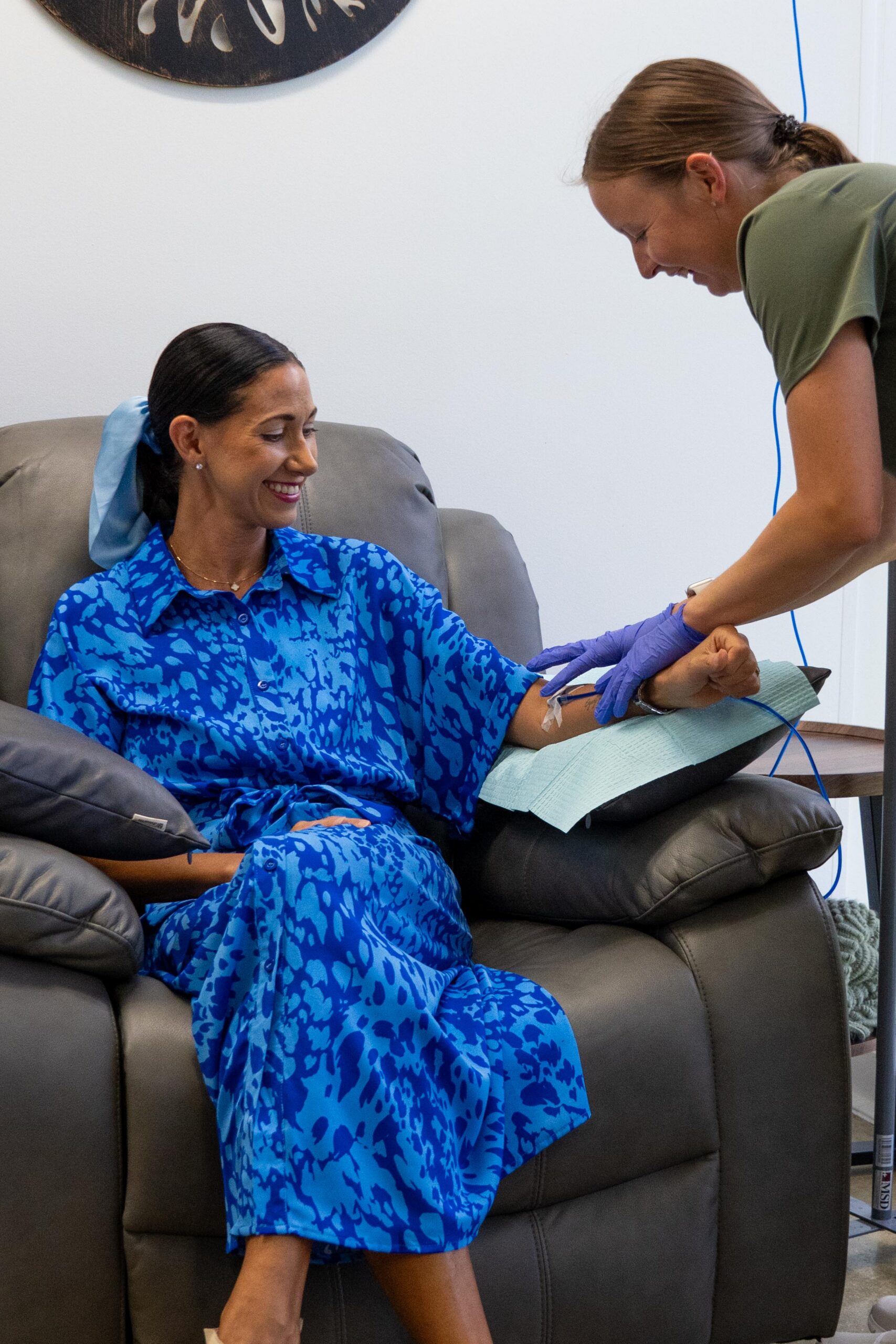
NAD+ IV therapy is an infusion of nicotinamide adenine dinucleotide, a coenzyme every cell needs to produce energy and repair DNA, but one that naturally declines with age.
The infusion is designed to support energy, mental clarity, and cellular function. It’s one of the more requested IV therapies in longevity medicine, and levels may be checked through NAD+ testing before and after a course of therapy.
Ovarian PRP (Platelet-Rich Plasma) Therapy
Ovarian PRP therapy involves concentrating platelets from a patient’s own blood and injecting them into the ovaries. It is an emerging approach with limited research, and a physician reviews testing first to decide whether it fits a patient’s goals.
It may be discussed alongside hormone testing and nutrient support, and each plan is customized based on the patient’s age and lab results.
PEMF Therapy (Pulsed Electromagnetic Field Therapy)
PEMF therapy is a non-invasive therapy that uses low-level electromagnetic pulses delivered to the body. It is applied through a mat or device placed near the target area; session details vary by care plan.
Peptide Therapy
Peptide therapy uses short chains of amino acids, called peptides. Different peptides have different properties, so the specific product and intended use should be reviewed with a licensed provider.
Because different peptides act on different pathways, therapy is customized to each patient’s goals and lab results.
Procaine IV Therapy
Procaine IV therapy uses procaine, a local anesthetic compound, delivered intravenously. A physician reviews each patient’s health history and goals to determine whether it is appropriate, and the plan is customized from there.
Prolotherapy
Prolotherapy is an injection-based therapy that introduces an irritant solution, often a dextrose solution, into a target area such as a ligament or tendon.
It may be considered for ongoing joint discomfort, especially when conservative approaches haven’t been a good fit. Multiple sessions, often spaced several weeks apart, are usually part of the plan.
PRP (Platelet-Rich Plasma) Therapy
PRP therapy is a regenerative therapy that concentrates platelets from a patient’s own blood and reinjects them into a targeted area, such as a joint, the scalp, or skin.
PRP may be used across several applications, including joint, hair, and facial areas, depending on the patient’s care plan.

Regenerative Injection Therapy
Regenerative injection therapy is an umbrella term for injection-based therapies, including PRP, prolotherapy, and tissue allografts. The specific therapy, product, and target area depend on the patient’s evaluation and care plan.
These therapies may be discussed for joint, tendon, and ligament concerns after evaluation by a licensed provider. If you’re weighing options for a specific injury, our regenerative injections and cellular medicine page covers the full range in more depth.
The table below compares three common regenerative injection options.
| Therapy | What Is Injected | Source | Commonly Considered For |
| PRP therapy | Concentrated platelets | Patient’s own blood | Joints, scalp, skin |
| Prolotherapy | Irritant solution | Usually dextrose | Weakened ligaments, tendons |
| Tissue allograft therapy | Processed donor tissue | Screened, consenting donors | Availability and use depend on the product and care plan |
Stellate Ganglion Block (SGB)
A stellate ganglion block (SGB) is an established procedure that targets a bundle of nerves in the neck. A licensed healthcare professional screens candidates and reviews the risks first, then performs the injection using image guidance.

VSEL (Very Small Embryonic-Like Stem Cell) Therapy
VSEL therapy refers to an approach involving a patient’s own naturally occurring VSEL cells. The terminology and available protocols should be reviewed with a licensed provider.
Unlike therapies that introduce donor cells, VSEL protocols are described as using the patient’s own cells. Whether this approach is appropriate depends on the patient’s evaluation and care plan.
Weight Optimization Therapy
Weight optimization therapy is a medically guided approach to weight management that looks beyond calories to consider hormone balance, metabolic function, and muscle activation alongside nutrition and activity.
Plans may combine GLP-1 metabolic therapy, peptide therapy, or metabolic muscle activation with lab monitoring, as determined by the patient’s evaluation and care plan.
The table below compares the main approaches a weight optimization plan may combine.
| Approach | How It Works | Main Focus |
| GLP-1 metabolic therapy | Medication that mimics a natural appetite-regulating hormone | Appetite, blood sugar, fullness |
| Peptide therapy | Short chains of amino acids designed to signal cells | Metabolic support |
| Muscle activation (EmShape Neo X) | Electromagnetic muscle contractions plus radiofrequency energy | Muscle tone and strengthening |
This glossary is for general educational purposes and is not medical advice. Some therapies described are used off-label or are not FDA-approved. Eligibility for any therapy is determined by a licensed provider after an evaluation. Consult with your healthcare provider before beginning any new wellness protocol. Individual results vary.